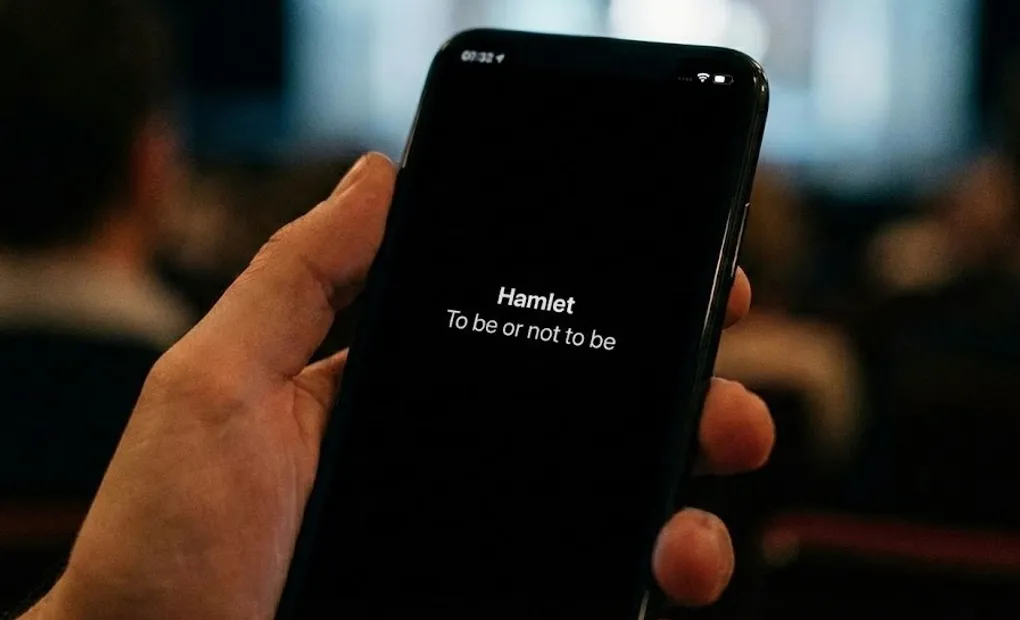
Subtitles Without Borders: Empowering Flexible Performance Spaces with BYOD
For decades, the LED surtitle screen has been the industry standard for flagship opera houses and grand theatres. However, as the landscape of performance evolves—moving from grand stages to historic sites, galleries, and international tours—the tools we use to provide accessibility must also diversify.
The rise of BYOD surtitling isn’t about replacing tradition; it’s about ensuring that stories told on stage remain accessible, no matter how non-traditional the setting.
Defining the Two Paths:
- Fixed Hardware: Best for permanent installations in large-scale, purpose-built theatres.
- BYOD Surtitling: A web-based solution that broadcasts subtitles directly to the audience’s smartphones, ideal for variable or non-traditional environments.
Choosing the Right Tool for the Space
Understanding which system to use depends entirely on the architecture of the venue and the nature of the production.
1. The Touring & Festival Circuit
For productions on the move, logistical agility is paramount.
- The Challenge: Shipping, rigging, and recalibrating heavy LED panels at every tour stop.
- The BYOD Solution: Since the system is web-based, it travels in a laptop bag. It allows touring companies to maintain consistent accessibility standards across diverse venues without the overhead of physical freight.
2. Heritage Buildings & Non-Traditional Spaces
Historic opera houses and adaptive reuse spaces (like art galleries or warehouses) often face structural constraints.
- The Challenge: Many historic prosceniums cannot support the weight of LED rigging, and site-specific venues often lack the sightlines for a single central screen.
- The BYOD Solution: Mobile subtitles bypass architectural limits. Whether the audience is seated in a 19th-century balcony or standing in an open-plan gallery, the text is delivered directly to their hand.
3. High-Density Multilingual Requirements
In global cities and international festivals, the audience’s linguistic needs are increasingly diverse.
- The Challenge: A physical screen has a finite surface area. Displaying more than two languages simultaneously often compromises legibility for everyone.
- The BYOD Solution: By using individual “private layers,” a production can offer five or more languages simultaneously. Each viewer selects the stream they need, ensuring inclusion without visual clutter on the stage.
Respecting the Theatrical Atmosphere
Every surtitling method involves a compromise with the darkened auditorium. While LED screens provide a collective focal point, BYOD offers a localized experience:
- Precision Control: Using OLED-optimized dark modes, mobile subtitles focus light only where it is needed—in the patron’s personal space.
- Natural Shielding: Patrons naturally shield their devices with their bodies, offering a way to manage light spill that is fundamentally different from a high-mounted, radiant hardware screen.
Technical Resilience: Ready for the Modern Patron
Modern BYOD platforms like SurtitleLive are engineered for the specific rigors of live performance:
- Battery Efficiency: Optimized web-viewers consume minimal power (typically <5% per performance).
- Network Stability: Low-bandwidth caching ensures that subtitles stay synchronized even in challenging Wi-Fi environments or user mobile data connections.
Is BYOD the Right Choice for Your Project?
In short, LED surtitles excel in permanent, large-scale venues, while BYOD surtitling excels wherever space, language, or logistics vary.
BYOD is the ideal solution if your production meets any of the following:
- Variable Sightlines: Your venue has “obstructed view” seats where a central screen is invisible.
- Site-Specific Work: You are performing in a space not originally designed for theatre.
- Multilingual Focus: You need to provide 3+ languages to a diverse international audience.
- Touring Efficiency: You need an accessibility layer that can be set up in minutes, not hours.
Conclusion
The goal of any surtitle system is to bridge the gap between the performer and the audience. By recognizing that LED screens solve for scale while BYOD solves for variability, producers can choose the tool that best serves their art and their space.